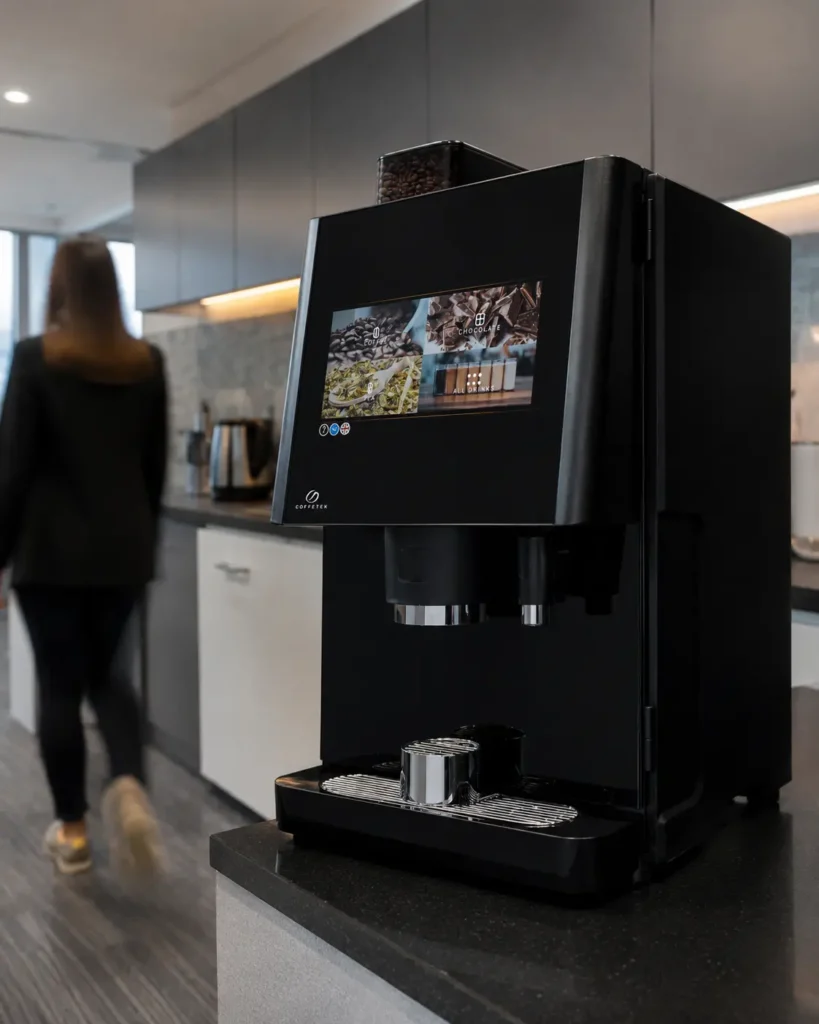
A frozen vending machine can offer workplaces a practical way to provide staff with proper meals without needing to operate a traditional canteen. Whether you’re managing a busy warehouse, an office or a workplace operating around the clock, frozen food vending gives employees convenient access to meals on site, without the staffing and space requirements of a conventional catering operation.
Quick summary
Frozen vending machines store ready-made meals at controlled freezing temperatures, allowing employees to purchase food conveniently throughout the working day. When suitable reheating facilities are available, they can provide an alternative to a staffed canteen. Modern smart freezer vending machines also offer cashless payments and stock monitoring technology, making them a practical option for workplaces with varying shift patterns and catering requirements.
Why are workplaces looking for alternatives to traditional canteens?
Providing food for employees can be surprisingly complicated, particularly for businesses that don’t have the facilities or demand to justify a fully staffed canteen.
A large warehouse might operate across several shifts, with employees taking breaks at completely different times. An office might have enough staff to warrant convenient meal options, but not enough daily demand to support an on-site catering team.
Then there are workplaces where leaving the premises isn’t particularly convenient. Industrial estates, distribution centres and more remote business locations aren’t always within walking distance of shops or cafés.
Traditional catering arrangements can involve considerable overheads, including kitchen facilities, staffing, food preparation and cleaning. For some businesses, these arrangements simply aren’t practical.
That’s where alternative staff catering solutions become worth exploring.
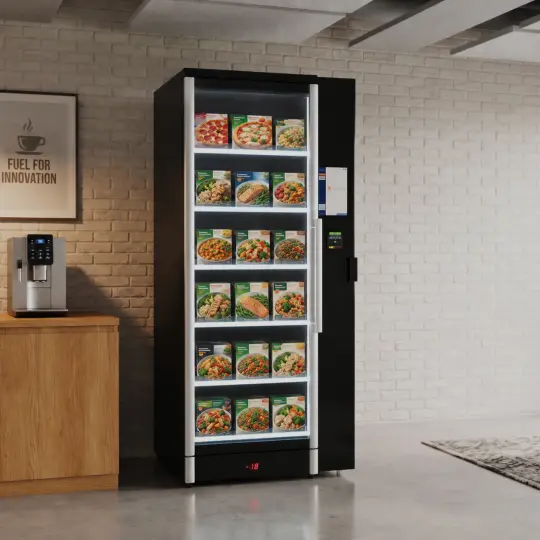
A frozen vending machine can provide access to ready-made meals without requiring a conventional canteen. Rather than preparing meals on site, businesses can offer a selection of frozen products that employees purchase and reheat when needed.
The important distinction is that the machine stores and dispenses the food, while suitable reheating facilities allow staff to prepare their meals afterwards.
How does a frozen vending machine work?
A frozen food vending machine operates differently from the traditional snack machines most people are familiar with.
Instead of storing crisps, chocolate or bottled drinks, it maintains a controlled frozen environment suitable for packaged frozen food products.
Employees select the items they want, complete their purchase and collect their food, which can then be prepared according to the manufacturer’s instructions.
Modern machines can use smart technology to make the purchasing process particularly straightforward.
Smart freezer vending machines
Some newer systems operate more like self-service retail cabinets than conventional vending machines.
For example, Westways’ Smart Freezer Vending Machines range includes equipment designed to provide convenient access to frozen food.
Their smart freezer equipment can incorporate features such as:
– Cashless purchasing using compatible cards or payment systems.
– Electronic access controls that unlock the cabinet for purchases.
– Weight-sensitive shelves that detect when products have been removed.
– Technology to monitor stock movement.
– Frost-free operation and features designed to reduce condensation.
The exact technology depends on the equipment selected, but the overall idea is to make workplace meal vending convenient for employees and manageable for businesses.
What happens after someone buys a meal?
It’s worth understanding that a frozen vending machine doesn’t necessarily heat or cook the food it supplies.
In many workplace installations, employees purchase a frozen meal and then use a separate microwave or other appropriate heating equipment.
That means businesses considering frozen food vending should think about the complete meal experience, rather than the vending machine alone.
A machine positioned next to a suitable staff kitchen, for example, could be much more convenient than one installed somewhere without access to reheating facilities.
This is particularly important when providing meals rather than drinks or snacks, as people need somewhere practical to prepare and eat their food.
Which workplaces could benefit from frozen food vending machines?
Not every business needs a traditional canteen, but plenty of workplaces could benefit from providing something more substantial than snacks.
The suitability of frozen food vending often depends on working hours, staff numbers, existing facilities and how easily employees can access food elsewhere.
Warehouses and distribution centres
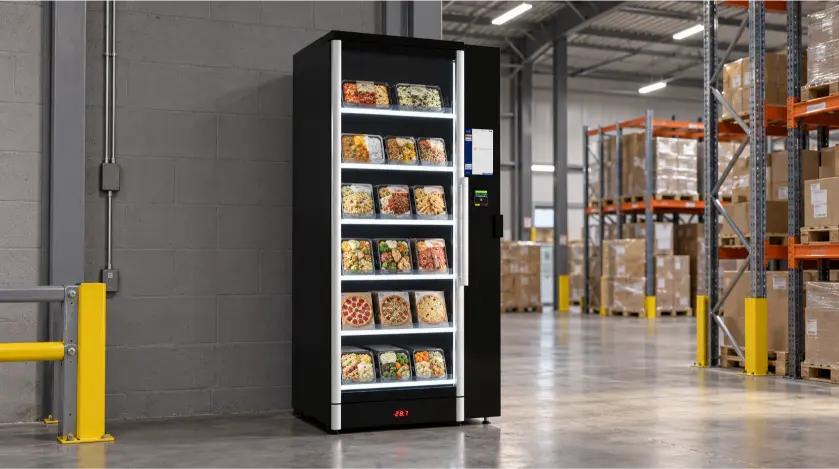
Warehouses are particularly well suited to workplace meal vending because their operating hours often extend beyond the traditional working day.
Employees working overnight shifts might struggle to find convenient food options, especially if the site is located on an industrial estate where nearby businesses close in the evening.
A frozen food vending machine provides another option for workers who haven’t brought a meal from home or don’t have time to travel elsewhere during their break.
For warehouses with multiple shifts, this can also help provide a more consistent refreshment offering throughout the day and night.
Offices without catering facilities
Office employees might have plenty of nearby lunch options, but that doesn’t necessarily mean leaving the workplace is always convenient.
Busy meeting schedules, limited lunch breaks and offices in more isolated locations can all make on-site food provision appealing.
A frozen vending machine could give employees an alternative to bringing lunch from home or purchasing food elsewhere.
It could also work alongside existing coffee machines, water dispensers and snack vending equipment to create a more comprehensive staff refreshment area.
Manufacturing and industrial workplaces
Factories and manufacturing facilities often operate to strict production schedules, making convenient access to refreshments especially important.
Depending on the site, workers might have relatively short breaks or limited opportunities to leave the premises.
Providing meals on site can help employees make better use of their allocated break times without relying entirely on nearby food outlets.
Healthcare and other shift-based environments
Healthcare facilities, transport operations and other businesses with irregular working patterns may also benefit from frozen food vending.
These workplaces can have staff taking breaks at different times, including overnight and at weekends.
A self-service food option can offer greater flexibility when traditional catering facilities are closed, although the precise arrangement will need to suit the site’s requirements and users.
What should businesses consider before installing a frozen vending machine?
A frozen vending machine can solve a genuine workplace problem, but choosing the right equipment involves more than finding somewhere to position it.
Before investing in workplace meal vending, businesses should consider how the service will operate day to day.
1. Available space and installation requirements
Smart freezer vending machines require sufficient floor space, suitable power and appropriate access.
You’ll also need to account for door clearance, ventilation, delivery access and the space employees need when using the equipment.
A machine might fit physically into a staff room but still be poorly positioned if it obstructs walkways or creates queues during busy breaks.
It’s therefore important to assess the installation area before selecting a machine.
2. Reheating facilities
If the machine supplies frozen meals that require heating, suitable reheating facilities are essential.
A microwave might be sufficient for some food products, provided it is used in accordance with the meal manufacturer’s instructions.
However, the number of employees using the facilities also matters.
One microwave might be practical for a small office, but a large warehouse with dozens of employees taking their break simultaneously could require additional equipment.
Businesses should also consider counter space, cleaning arrangements and somewhere comfortable for staff to eat.
3. Choosing an appropriate food selection
The success of workplace meal vending depends partly on whether the available products suit the people using it.
Different employees will have different preferences and dietary requirements, so businesses should discuss the available options with their vending supplier.
Things worth considering include portion sizes, meal variety, allergen information, dietary preferences and the types of food suitable for the equipment.
There’s little benefit in providing a machine full of products that employees aren’t interested in purchasing.
Starting with a suitable range and reviewing purchasing patterns over time can help businesses make more informed decisions about future stock.
4. Stock management and replenishment
Frozen food vending requires appropriate stock management to maintain product availability and food safety.
This includes monitoring temperatures, checking product dates, maintaining suitable storage conditions and following the relevant food manufacturer’s handling instructions.
Smart equipment may help suppliers monitor stock movement and identify which products need replenishing.
However, businesses should still establish who is responsible for maintaining the machine, checking stock and responding to problems.
When discussing a vending agreement, ask how frequently the machine will be replenished, how stock availability is monitored and what happens if equipment develops a fault.
5. Expected demand and operating costs
Before choosing a frozen vending machine, it’s worth estimating how often employees are likely to use it.
Consider the number of staff on site, shift patterns, existing catering arrangements and whether employees will be purchasing meals regularly or occasionally.
Demand may be very different between a warehouse operating continuously and a small office where employees work from home several days a week.
Businesses should also establish the equipment costs, energy requirements, maintenance arrangements and any applicable product purchasing commitments.
The most suitable option is one that fits the workplace’s actual requirements rather than simply offering the largest capacity.
How Westways can help with workplace meal vending
Choosing between different frozen food vending machines is easier when you have advice from a supplier who understands the practical requirements of workplace refreshments.
Westways Vending supplies a range of food vending equipment to businesses across Sussex, Surrey, Kent and the wider South East.
Its Smart Stores range includes equipment for fresh, chilled and frozen products, including the Cantaloupe Single Smart 600 Freezer. These systems are designed to provide convenient self-service purchasing, with modern payment and stock management technology.
Businesses can discuss their available space, staff numbers, working patterns and food requirements with the Westways team to identify a suitable arrangement.
Westways also offers vending management and ongoing support services, allowing businesses to explore the level of involvement that works best for them.
A frozen vending machine doesn’t have to replace every aspect of an existing catering service. It might provide an alternative where there is no canteen, supplement existing facilities or give employees access to meals outside normal catering hours.
The aim is to find a practical solution that works for the people using it every day.
Explore frozen food vending with Westways
If your business needs to provide convenient meals without running a traditional canteen, a frozen vending machine could be worth considering.
At Westways Vending, we can help you explore the available equipment and identify a solution suited to your workplace.
Whether you’re looking for a smart freezer for a warehouse, an office or another working environment, our team can talk you through the options.
Visit our frozen food vending machines page or get in touch to discuss your requirements.
Telephone: 0800 195 3170
Email: info@westwaysvending.co.uk
Website: https://www.westwaysvending.co.uk/
Frequently asked questions about frozen vending machines
What is a frozen vending machine?
A frozen vending machine is a self-service unit designed to store and dispense frozen food products. Unlike traditional snack machines, it maintains the low temperatures required for frozen storage. Employees can purchase packaged meals or other suitable products and prepare them using separate reheating equipment, following the food manufacturer’s instructions.
Can a frozen food vending machine replace a workplace canteen?
For some workplaces, a frozen food vending machine can provide a practical alternative to staffed catering, particularly where demand doesn’t justify operating a canteen. However, it doesn’t offer the same facilities as a full kitchen. Businesses should consider meal selection, staff numbers, reheating equipment and eating areas before deciding whether it meets their requirements.
How do smart freezer vending machines work?
Smart freezer vending machines can use electronic access controls, cashless payments and stock monitoring technology to simplify purchasing. Depending on the model, customers may access the cabinet using an app or payment card, while sensors track products removed from the shelves. The machine maintains frozen storage conditions while allowing employees to purchase food without assistance.
What types of food can be sold in frozen vending machines?
Frozen vending machines can stock a variety of suitably packaged frozen products, including ready meals. The available selection depends on the equipment, supplier and food range. Businesses should consider portion sizes, dietary requirements, allergen information and preparation instructions when selecting products, particularly when providing meals for employees with different preferences.
Do frozen food vending machines need a microwave?
The vending machine itself doesn’t necessarily require a microwave to operate, but employees will need suitable facilities to prepare any meals that require reheating. For many ready-made frozen meals, this may involve a microwave. Businesses should consider how many people will use the facilities simultaneously and ensure equipment is appropriate for the meals supplied.
Are frozen vending machines suitable for warehouses operating 24 hours a day?
Yes, frozen vending machines can be particularly useful for warehouses operating around the clock. They allow employees to purchase food during overnight shifts, early starts and weekends when conventional catering may be unavailable. However, businesses should plan for appropriate replenishment, temperature management, cleaning and access to suitable meal preparation facilities.
How are frozen food vending machines restocked?
Restocking arrangements depend on the supplier, machine and service agreement. Some businesses may prefer managed arrangements, while others may have different requirements. Smart stock monitoring technology can help identify when products have been purchased and when replenishment may be needed. Frozen food must be handled and stored according to the appropriate food safety requirements throughout the process.
Where can I get a frozen vending machine for my workplace?
Westways Vending supplies smart freezer vending equipment to businesses across Sussex, Surrey, Kent and surrounding areas. The team can help you explore suitable machines, discuss your workplace requirements and consider the ongoing service arrangements. Contact Westways on 0800 195 3170 to discuss frozen food vending for your premises.